A Feathered Dawn: Birdwatching in Western Sichuan's Snow Peak
Release Time: January 09, 2026 Author: Ava Wu
A Feathered Dawn: Birdwatching in Western Sichuan's Snow Peak
Driving westward from Chengdu, the terrain gradually rises as the Hengduan Mountains come into view, causing the connected cities and villages to become fragmented, flowing around the mountains and nestling into the sunlit slopes. On the winding road, to the left, the shrubs and grasslands, in a soft green undulation, almost press against the window; to the right, the long river valley carries a streak of gray-blue water, dancing and rushing through the rugged terrain, presenting a wild, untamed beauty. This is the unique greeting the Hengduan Mountains offer every traveler from the plains. In the distance, the peaks, climbing higher with elevation, gradually reveal a patch of pure white — our Sichuan Birding destination for this AlpineBirding expedition — the magnificent snow mountains of Lianghekou village and Xiaojin.
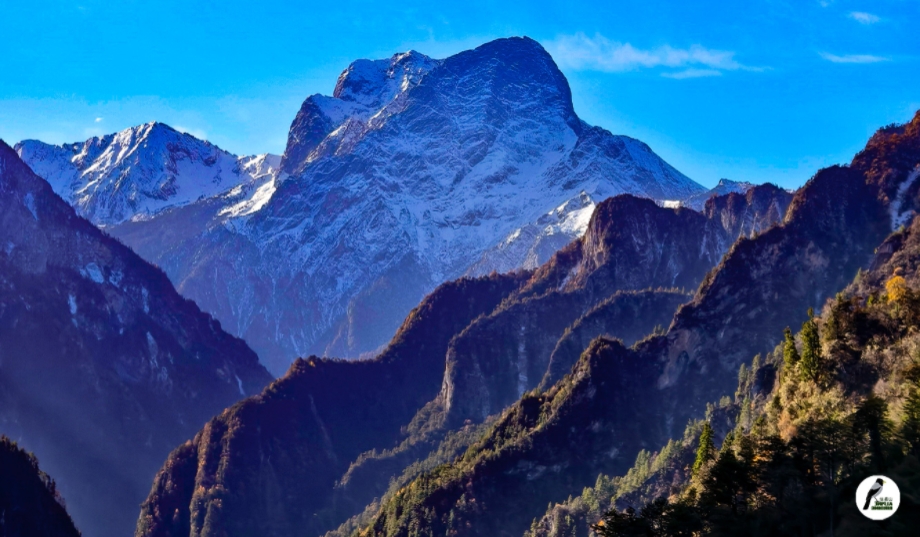
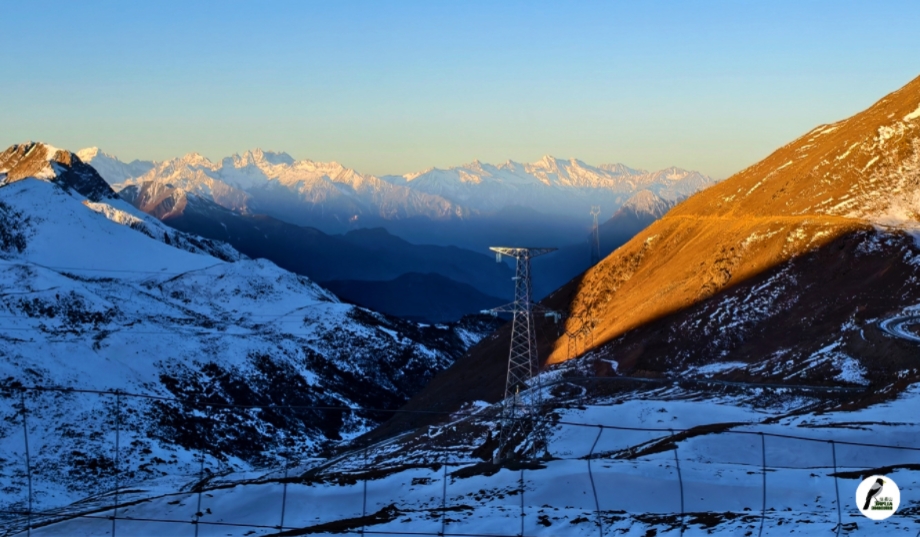
The snow mountains of western Sichuan are generous; their habitats are rich and diverse, with bird species each bearing their distinct characteristics. They are also harsh; the valleys below are mostly dry, and the high altitudes are frigid, with temperatures dropping below -10°C even in autumn. We, the unwitting visitors, shiver in our down jackets. While marveling at the combination of car and heating, which is truly one of humanity's greatest inventions, it's hard not to feel a deep reverence for the life forms inhabiting this land.
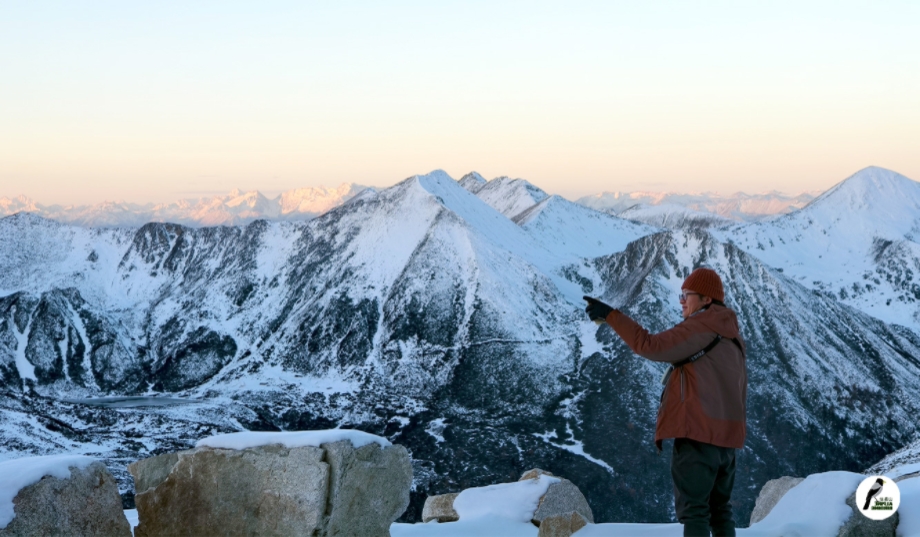
The Snow Mountain Has Two Sunrises
In birdwatching in western Sichuan, the priority is to wake up early and climb to the mountaintop in search of Galliformes. The effects of millennia of glacial deposition have built up large, rugged stone fields at the mountain's peak. This area is cold year-round, with nothing but stones, snow, and sparse grass to accompany you. By winter, even the grass is scorched, blackened by the fire. Yet, it is precisely in such barren places that the dazzling species of Chinese birds, sought after by birdwatchers, have thrived. Galliformes are rare, beautiful, and fragile in the eyes of humans, but they themselves likely do not see it that way. They are so tenacious, thriving in the silent wilderness, living so brilliantly, like another sun on the horizon.
When it comes to early rising, lazy humans are always outdone by chickens. The sky is cold, our bodies shivering, and our half-awake minds are foggy. But the chicken, small and inconspicuous amid the boulders, requires full focus to be noticed. But the moment you do see it, an indescribable excitement fills your body. The uniform snow, earth, and stone suddenly stir in the binoculars, transforming into a group of Tibetan Snowcocks running along the contour lines of the vast highlands. From below, their white, round bellies bounce like snowballs, each bounce synchronizing with your excited heartbeat. The brightening sky unfolds like a slowly pulled curtain, and these simple, resilient birds stop running and suddenly call out in unison, as if celebrating the victory of their long journey.
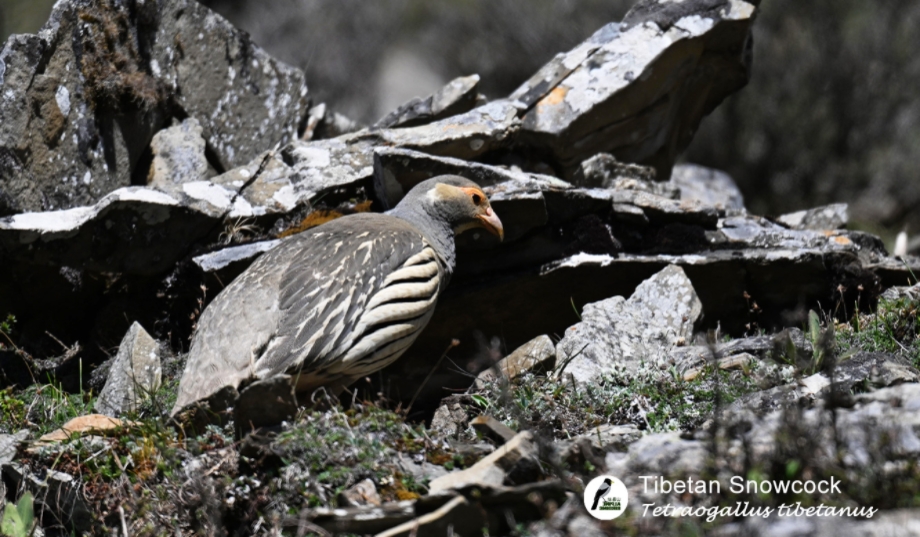
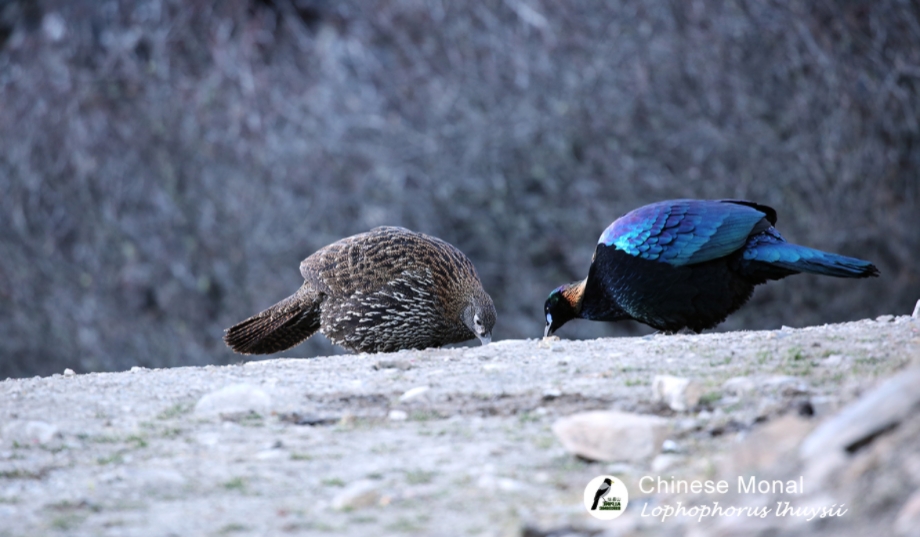
If recognizing the Tibetan Snowcock in its camouflage provides a spiritual sunrise, then catching a glimpse of the Chinese Monal is the most direct visual impact. We had the privilege of witnessing their stunning presence up close in Lianghekou village.
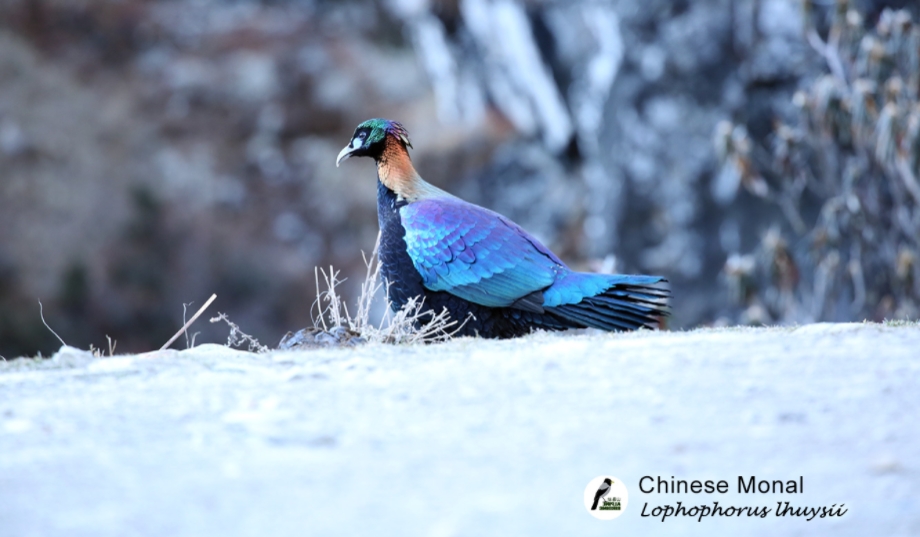
As the altitude decreases, the alpine rhododendron shrubs gradually regain life, their dark green spreading across the snowfields, forming a sanctuary for the Blood Pheasants.
The plumage of Galliformes is clearly divided into two categories: one, like the Tibetan Snowcock and Snow Partridge, unified in their protective colors, and the other, like the Chinese Monal, displaying sexual dimorphism where the male bird, in an effort to gain an advantage during courtship, sacrifices some safety for dazzlingly extravagant feathers.
The male Blood Pheasant, however, cleverly resides between these extremes. Its pale gray stripes float on the surface of its feathers, growing diagonally along the edges of the hanging feathers, giving a three-dimensional, silky texture that blends seamlessly with the slender grass of its habitat. Beneath it lies a soft greenish-red, subtly beautiful, like the soft mist beneath the grass leaves. During the breeding season, these vibrant colors may become even more pronounced.
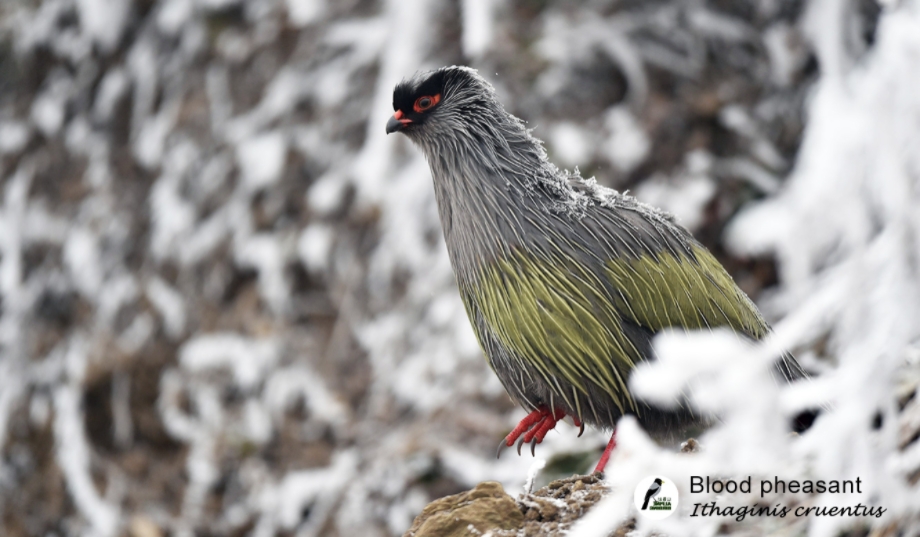
But now, in the cold autumn, amidst the icy snow and dead grass in the wilderness, the Blood Pheasants maintain their simplicity, huddling together for warmth. When they move, they always lead with a loud call, followed by the rest of the group in a long chain, occasionally disappearing, occasionally brightening the slope as they run.
Flowers Not Buried by Snow
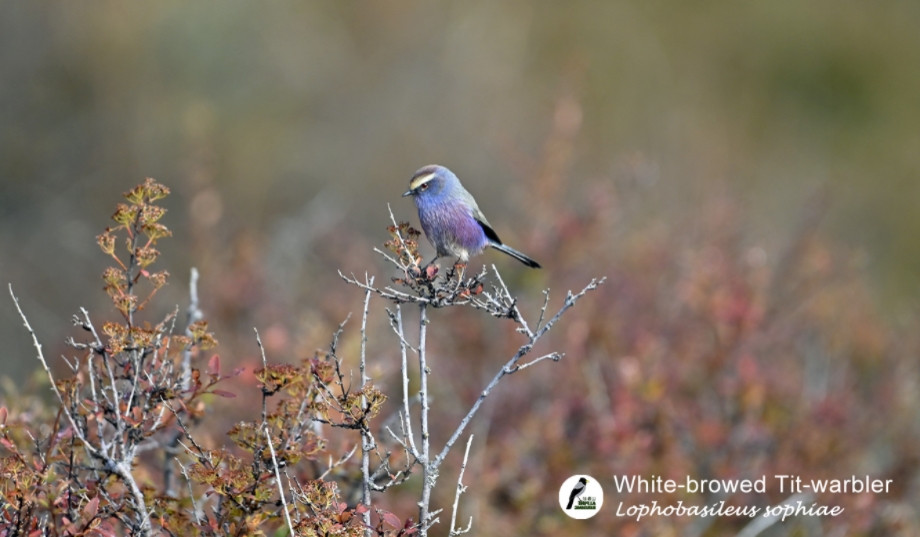
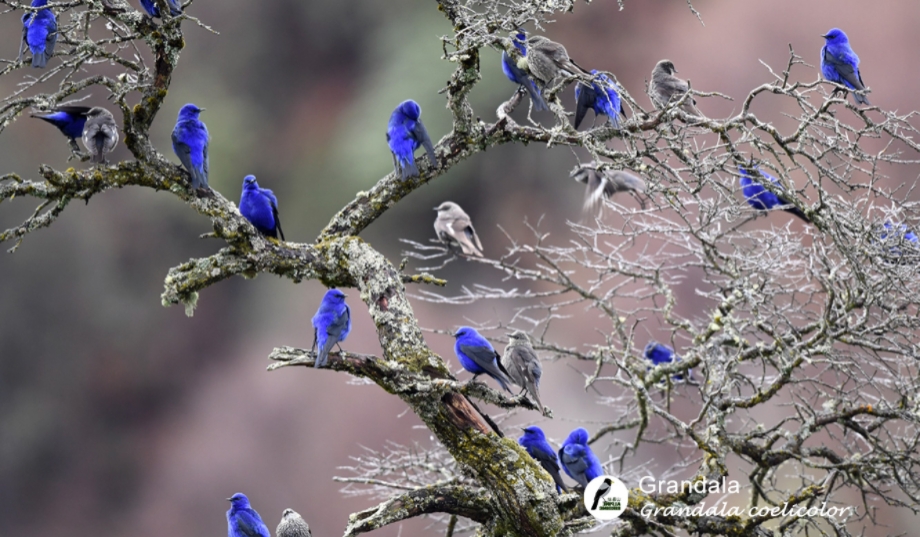
When nature’s hand reaches western Sichuan, it seems unable to resist applying the principle of balance. The more covered by white snow, the more vividly the birds' colors become, flying freely, singing loudly, like flowers that will never be buried by the winter cold and snow. Among these vibrant birds, in addition to the Galliformes' shining species, there are also the sparrows, unwilling to be left behind, with White-browed Tit Warblers and Grandalas being the two stars of this place.
These two are a perfect contrast: both employ a rich color palette, yet with low saturation. The White-browed Tit Warbler wears soft hues, its pattern a muted blend of grays and vivid splashes, like a flying Morandi palette. Coupled with their lively and noisy nature, wherever they go, the oppressive loneliness of the wilderness is soothed, and one’s heart leaps with these beautiful little birds.
The Grandala (male) is entirely deep blue. Against the backdrop of the sky, they are almost indistinguishable from ordinary black birds. But when they suddenly fly into the sunlight, the intense, rich blue instantly appears, as if shards of the sky have fallen to earth, taking your breath away in an instant.
The Soft Belly, the White Sea
Driving along the seemingly endless winding mountain road, as we try to approach the snow mountains, you can only feel their majestic and severe presence. The cliff faces are steep, strange peaks hanging high, sharp rocks piercing the snow, the biting wind whipping through.
But once we enter the heart of the snow mountain and drive into the valley, the mountain range, like a giant wave that has just rolled over, suddenly calms down, merging into a vast, flat, and even slightly concave snowfield. Amid the jagged mountains, this plain is almost expansive, with fine snow-like sand shining brightly in the center. Sometimes the fine texture disappears, becoming a smooth, mirror-like surface — this is when we encounter the High-altitude Salt Lake. For a moment, the wind softens, the bumps lessen, and we seem to have suddenly entered a profound white ocean, causing one to hold their breath and savor the stillness and gentleness of this place.

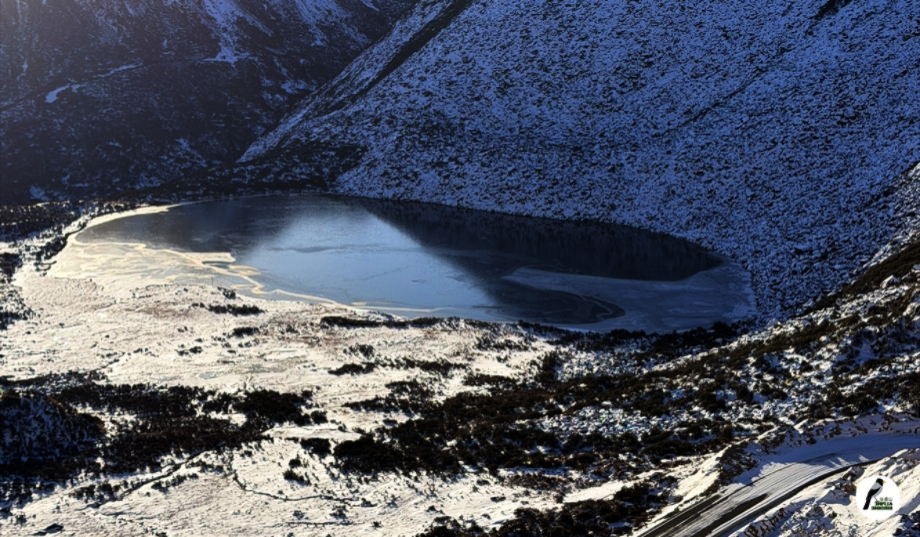
But upon reflection, wasn't this once an ocean? Before the Himalayan orogeny, tens of millions of years ago, this was a vast blue sea, where prehistoric fish, shrimp, and soft-bodied creatures leaped and danced. And now, the flying birds are the fish that swim here, the shrubs are the waves she stirs up. The once vast ocean has transformed into a snowfield, yet the soft belly of this land, its embrace of all life, remains unchanged.
As the car slowly turns back, it returns the white sea and the colorful flocks of birds to the mountains. In the rearview mirror, the snow mountains gradually close into a thin strip of light, eventually disappearing behind the overlapping gray-blue mountain shadows. What we carry with us are the shimmering spots in the binoculars, the hastily scribbled bird names in the notebook, and the long echo resonating within our chests, struck by both the mountains and the living beings. The Hengduan Mountains silently continue to divide the earth, gently separating wilderness from civilization, yet in certain moments, through the call of a bird or the melting of snow, they reveal to us the heartbeat they've concealed for millions of years.
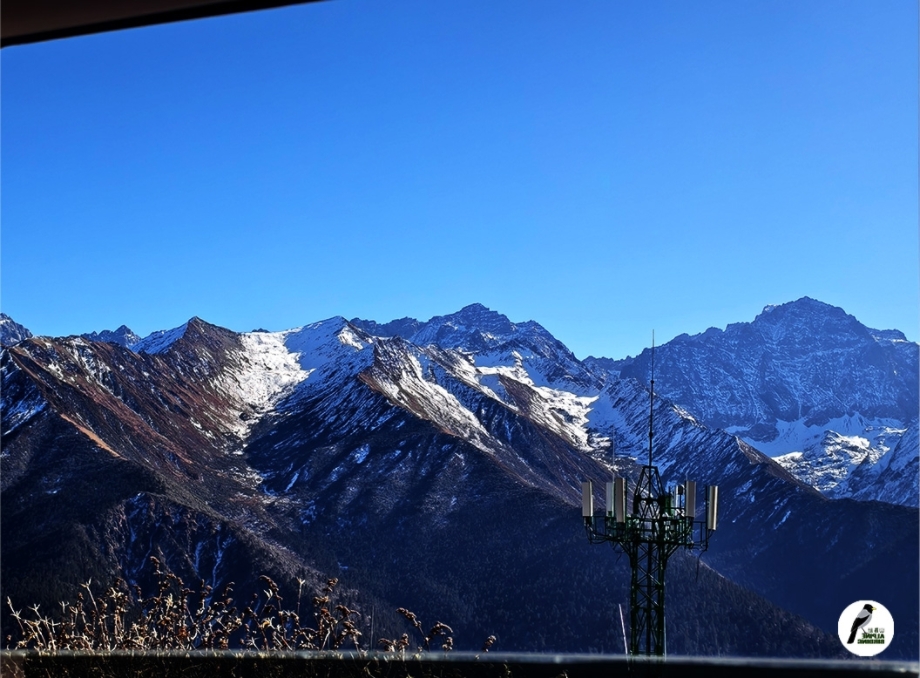
From then on, whenever we lift our eyes to the sky, or quietly trace the word mountain in our minds, what rises before us is no longer only those white, undulating peaks. It is also a deep and steady certainty — the certainty that beyond all that grandeur, silence, and desolation, there truly exists a promised land where flocks burst into flight and colors take wing. And we know this because, in the thin air of the highlands, we once reached out and received its invitation, written in nothing more than a single feather.